Seasickness and Swell on a Cliffs of Moher Cruise: How Rough Is It?
The harbour can look flat while the base of the cliffs heaves. Here is how rough the cruise really gets, and how to sail it without going green.
Short answer
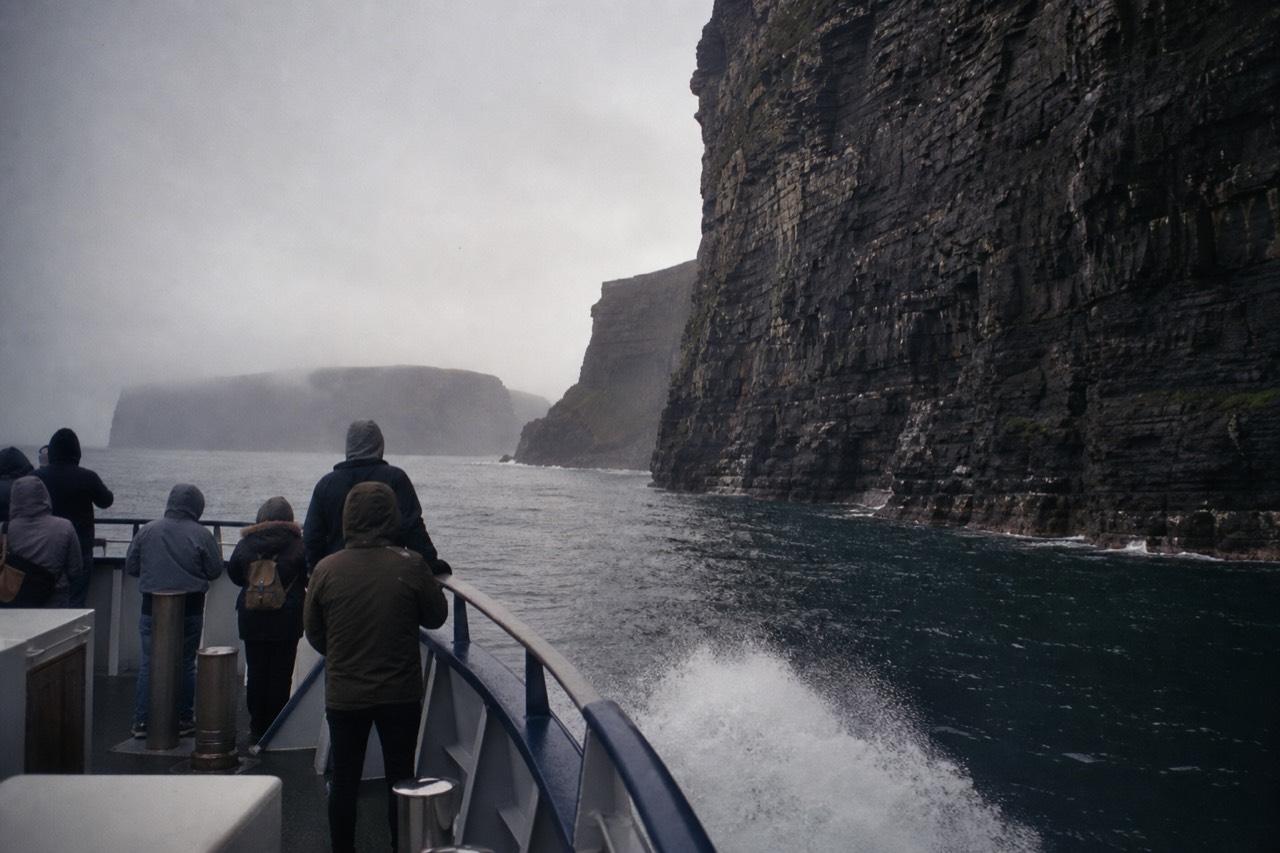
A Cliffs of Moher cruise ranges from glassy calm to genuinely choppy, depending on the Atlantic swell that day. The base of the cliffs is open sea, so a calm harbour can still mean a rolling ride. The stabilised Cliffs of Moher Express, new in 2025, softens the worst of it. Most passengers are fine; the seasick-prone should pick a calm morning.
Doolin harbour can sit like a mirror while, a few hundred metres south, the water at the foot of the cliffs is bucking. That gap catches a lot of visitors out. They watch the boat load in a calm little port, step aboard expecting the same, and meet a very different sea once the hull clears the shelter and reaches the open wall of rock. The cruise is not a white-knuckle ride, but it is an Atlantic boat trip, and the Atlantic gets a vote.
So the fair question is not whether the cruise is ever rough, but how rough, how often, and what you can do about it. Most sailings on most days are comfortable. A minority of days are genuinely choppy, and on those a handful of passengers turn green. The good news is that the variables are knowable: the sea state on your date, the boat you draw, the slot you pick, and a few simple things you do before you board.
Prices and review counts quoted in the editorial below are earlier planning snapshots, not live quotes. Check the booking option for your date, currency and party before comparing totals.
How rough is a Cliffs of Moher cruise?
On a calm day the cruise is smooth and easy; on a day with Atlantic swell it can roll and pitch, most of all at the foot of the cliffs. Most passengers on most sailings are perfectly fine. Rough days do happen, and a minority get seasick when the swell runs. The single biggest factor is the sea state on your date, not the boat you happen to be on.
The honest range is wide. Reviews from settled summer mornings describe a flat, easy hour where nobody gives the motion a second thought. Reviews from blustery days describe a rolling deck, spray over the rail, and a few people reaching for a bag. Both are true, and both are the same trip on different water. That is why any promise of a smooth ride would be dishonest: the sea decides, and it changes hour to hour.
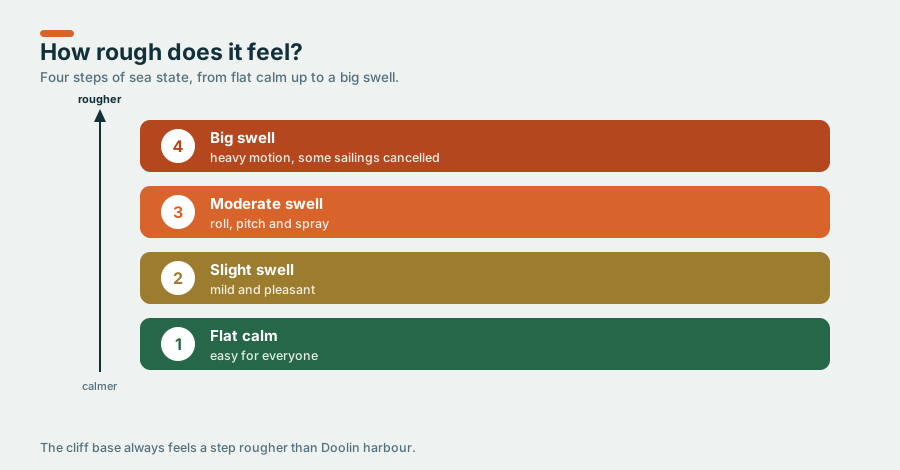
Put a number on it only loosely. The cruise sits somewhere between a calm harbour ferry and a small-boat sea trip, and where it lands on that scale depends entirely on the swell. The table below is a planning allowance, not an operator claim, to help you picture what a given forecast tends to feel like at the cliff base.
| Sea state on the day | What the cliff base tends to feel like | Who is usually fine |
|---|---|---|
| Flat calm, light wind | Gentle, barely any motion, easy for everyone | Almost everyone, including small children |
| Slight swell, a light breeze | Mild rise and fall, a pleasant sea feel | Individual responses vary |
| Moderate swell, fresh wind | Noticeable roll and pitch, spray at the bow | Consider whether the conditions suit your party |
| Big swell, strong wind | Heavy motion, wet, some passengers seasick | The motion-tolerant only; some sailings cancelled |
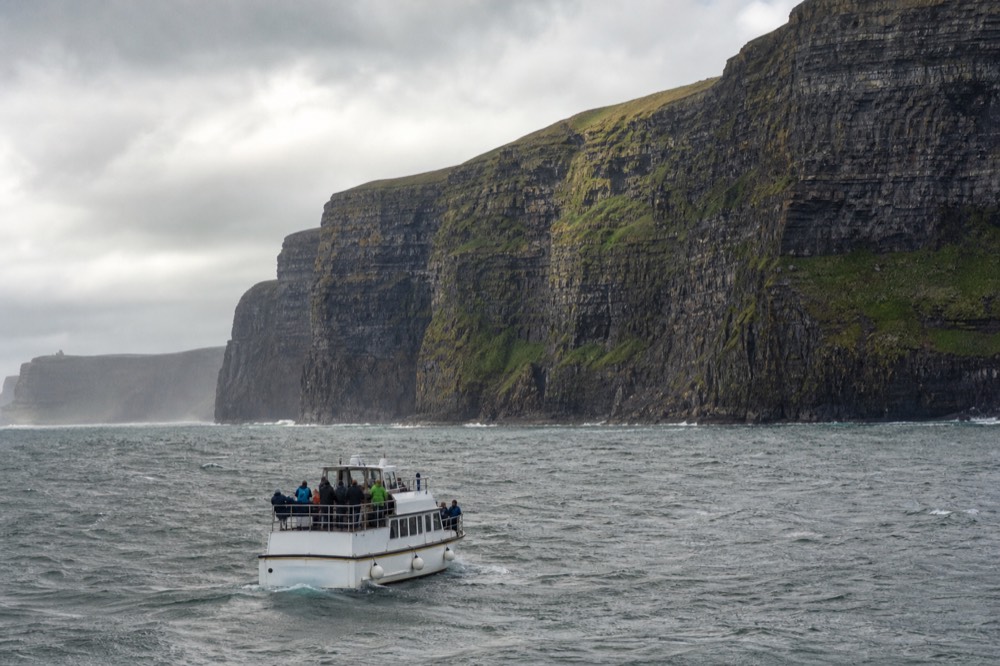
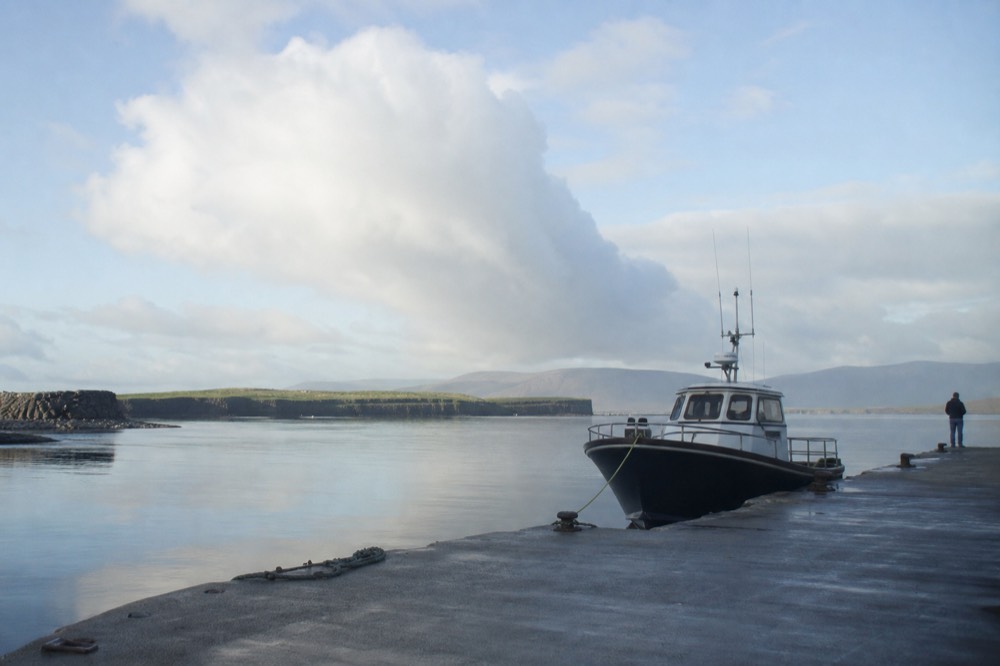
Here are the boats people mean when they talk about the Doolin cliff cruise, so you can see the options before the detail on which rides steadiest.
Your sailing conditions depend on the sea state and the vessel assigned that day. A listing name does not guarantee a particular boat. Our Doolin boarding guide covers the departure point and practical arrangements.
What makes the water rough at the base of the cliffs?
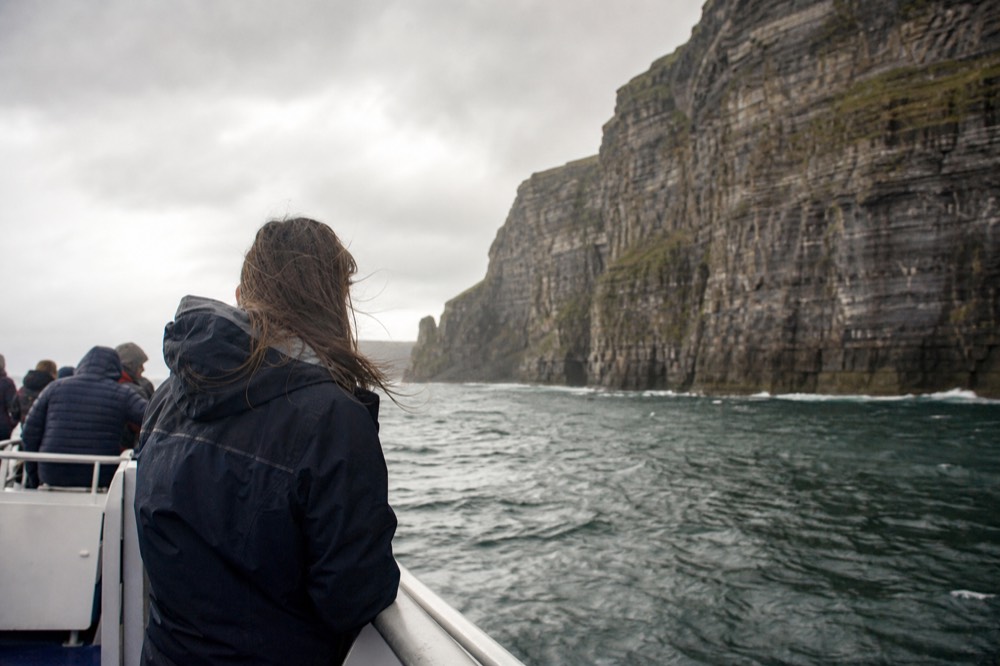
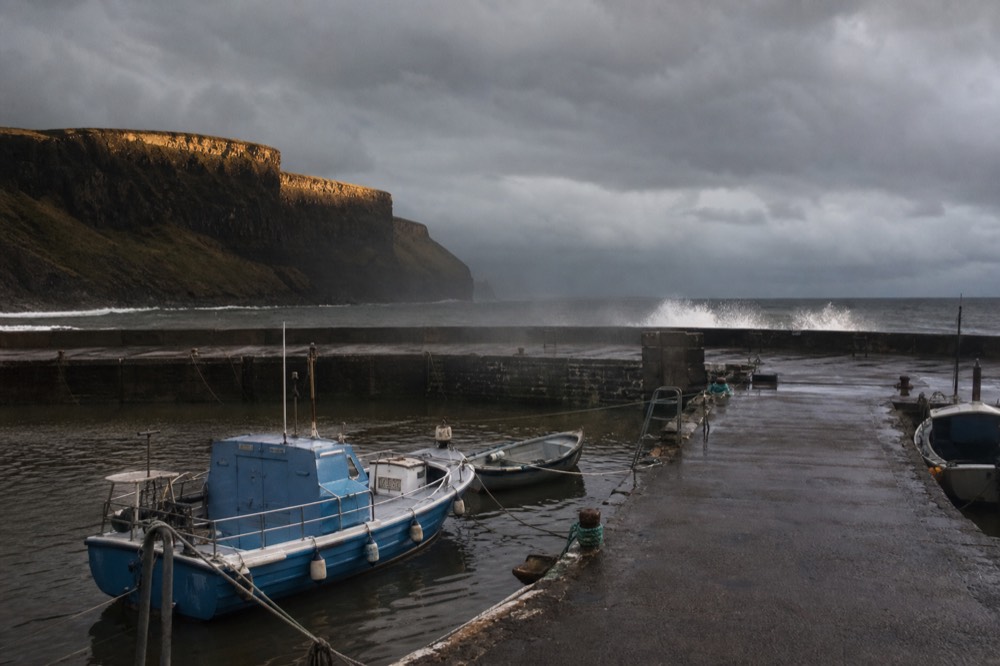
The chop comes from the open Atlantic meeting a vertical rock wall. Swell rolling in from the west strikes the 214-metre cliff face and reflects back, so the water at the base pushes from two directions at once. Wind, tide and the size of the ground swell all add to it, which is why a sheltered harbour can sit calm while the cliff base heaves under the wall.
The physics are simple once you picture them. A swell is energy moving through the water, and when it slams into a sheer cliff it does not just stop, it bounces. That reflected wave meets the next incoming one, and the two interfere right where the boat wants to sit, at the foot of the wall. The result is a short, confused, up-and-down motion that unsettles stomachs faster than a long, rolling ocean swell would. It is also why the roughest few minutes are almost always the closest ones to the rock.
Wind is the second driver, and it tends to build as the day warms. Tide matters too: a wind blowing against a running tide stacks the sea up steeper. None of this is unusual or dangerous in normal operating conditions, but it explains the mismatch that surprises people. The harbour at Doolin is tucked in and sheltered; the cliff base is raw open ocean against a 700-foot backstop, according to the record of the 214-metre cliff face. Calm in one is not calm in the other.
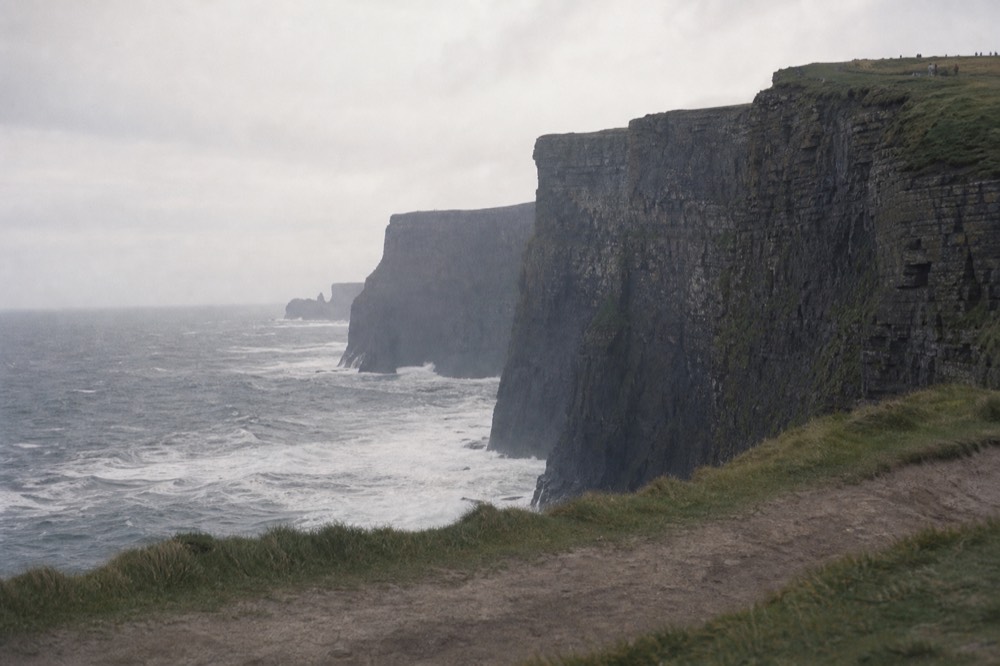
There is a practical upshot to all this. On a big-swell day the skipper often cannot bring the boat as close to the wall or hold it steady under the sea stack, so you both feel more motion and see a little less. That is the trade-off the sea imposes, and it is one more reason a settled day beats a wild one for this particular trip. For which weeks tend to serve up the calmest water, our guide to the calmest months to sail breaks the season down.
Does the stabilised Cliffs of Moher Express change the ride?
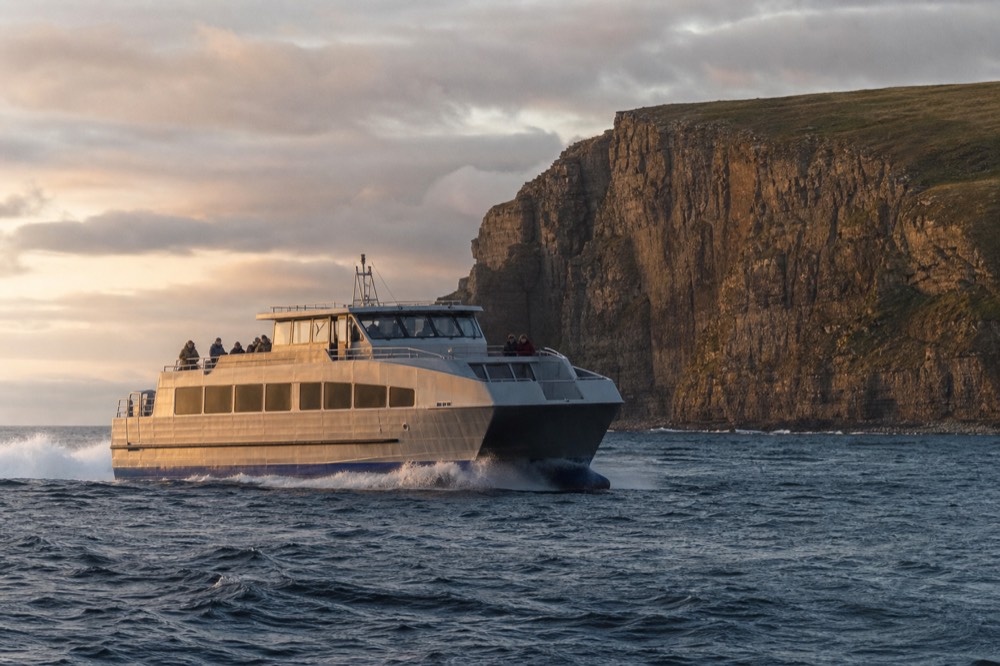
Yes, noticeably. The Cliffs of Moher Express, a roughly 32-metre aluminium boat delivered in 2025, carries modern stabilisers and anti-motion technology that damp the roll the older, smaller hulls could not. It rides steadier in swell, though no boat cancels an Atlantic sea entirely, and you cannot choose in advance which vessel runs your particular sailing.
The newest boat in the fleet is a genuine upgrade for anyone worried about motion. It is a larger aluminium monohull fitted with active stabilisers and interceptors that trim the pitch and roll, so it sits more settled in a seaway than the older, smaller passenger boats or any rigid inflatable. A vessel that big also simply carries through a swell better than a light hull that gets thrown around. One September 2025 passenger who sailed on a rough day with a large swell called the new boat a great ride, with only the people seated outside catching any spray.
The catch is honesty about what a stabiliser does and does not do. It reduces the motion; it does not remove it, and it does not turn a heaving Atlantic into a lake. On a big-swell day even the Express moves. The other catch is that you book a cruise, not a specific boat, so on any given sailing you might draw the modern vessel or an older one depending on the crossings that day. If a steadier ride matters to you, sailing in the settled core of the season stacks the odds in your favour more reliably than hoping for a particular hull. The independent vessel review of the new Express ferry covers its stabiliser setup in detail.
| Older, smaller boats | The stabilised Cliffs of Moher Express | |
|---|---|---|
| Size | Smaller passenger hulls | Roughly 32 metres, larger monohull |
| Ride in swell | More roll and pitch, thrown about more | Steadier, stabilisers damp the motion |
| Delivered | The existing fleet | New in 2025 |
| Seasickness complaints | More common on rough days | Fewer, though a big swell still moves it |
| Can you pick it? | No, you book a cruise, not a boat | No, whichever vessel runs your sailing |
The flagship listing, the Doolin Ferry Company one-hour cliff cruise, is the most reviewed of the Doolin sailings at 4.4 across 844 reviews, and it is the one most likely to talk about the modern fleet and multilingual commentary on its page. Two older Doolin listings for this same cruise are no longer bookable on Viator (confirmed deactivated, 2026-09-28), so this flagship listing is the one live way to book it.
Is the sea calmer in the morning than the afternoon?
Often, but it is not guaranteed. Wind frequently builds through the afternoon, so an early sailing can be calmer, and booking the first slot leaves the most room to rebook if conditions worsen. There is no published data proving mornings are always calmer, so treat an early departure as the safer bet rather than a promise of flat water on your date.
The morning-is-calmer idea is half folk wisdom and half sound reasoning. Sea breezes and daytime heating often strengthen the wind as the afternoon goes on, so all else equal an early boat tends to meet lighter air. But all else is rarely equal on the Atlantic coast, where a weather system can bring a rough morning and a calming afternoon just as easily. No operator or dataset confirms that the first sailing is reliably smoother than the last, so anyone promising you a flat morning is guessing.
Where the early slot genuinely helps is flexibility. Book the first departure of the day and, if the sea is marginal, you have every later sailing to reschedule into. Book the last slot and a cancellation leaves you nowhere to go that day. That reschedule cushion, more than any promise about the swell, is the real reason to lean early. For a fuller look at the trade-off, our take on morning versus afternoon sailings weighs light, crowds and comfort together.
| Slot | Typical upside | Watch out for |
|---|---|---|
| First morning departure | Wind often lighter, best reschedule flexibility | An early swell from an overnight system can still run |
| Midday sailings | Warmest light, most departures to choose from | Wind and chop can build by early afternoon |
| Late afternoon slot | Quieter decks, low golden light | A cancellation leaves no same-day fallback |
How do you stop yourself getting seasick on the cruise?
Ask a pharmacist about suitable motion-sickness prevention and follow the product instructions. Stay out in the fresh air on the open deck rather than in the cabin, keep your eyes on the horizon and the cliffs, and avoid a heavy meal beforehand. Arrive early to claim an outside seat, dress for wind and spray, and pick the calmest slot you reasonably can.
Ask a pharmacist which motion-sickness treatment is suitable for you or your child, and follow its label. Age limits and side effects differ. Fresh air, a horizon view and a position nearer the middle of the boat may help; no method guarantees a comfortable crossing.
Position matters almost as much as medication. Fresh air on the open deck, eyes fixed on the steady horizon or the cliff wall rather than a phone screen, and a spot near the middle of the boat where the motion is least: those three together fix a lot of queasiness. A light meal an hour or two before, rather than an empty or an overloaded stomach, keeps you steadier, and a warm, waterproof layer means the wind and spray do not add cold misery to the mix. Arrive early, because the best outside seats go first.
| What to do | Why it works |
|---|---|
| Ask a pharmacist about prevention | Choose a suitable treatment and follow its label |
| Stay outside in the fresh air | Cabin air and the enclosed feel make nausea worse |
| Watch the horizon or the cliffs | A fixed distant point settles the inner ear |
| Eat lightly beforehand, not on empty | Steadies the stomach without overloading it |
| Sit mid-boat, arrive early for the spot | The middle moves least; good seats go fast |
| Dress for wind and spray | Cold and wet make queasiness harder to shake |
Who should think twice about the cliff cruise?
Think twice if you get badly seasick and your only free slot is a rough, windy afternoon, if a boat's motion is a genuine health issue for you, or if what you really want is the clifftop walk. Very young children and anyone unsteady on their feet find a heaving deck harder to manage. On those days the clifftop view is the safer, drier call.
For most people the answer is simply to sail on a calm day and take the sensible precautions. But some travellers really are better off on land. If you know you are strongly prone to motion sickness and the forecast for your only available window is windy, forcing the trip risks a miserable 45 minutes for the sake of a photo you can get from the clifftop. There is no shame in that call, and the money is better kept than spent on a sailing you will not enjoy.
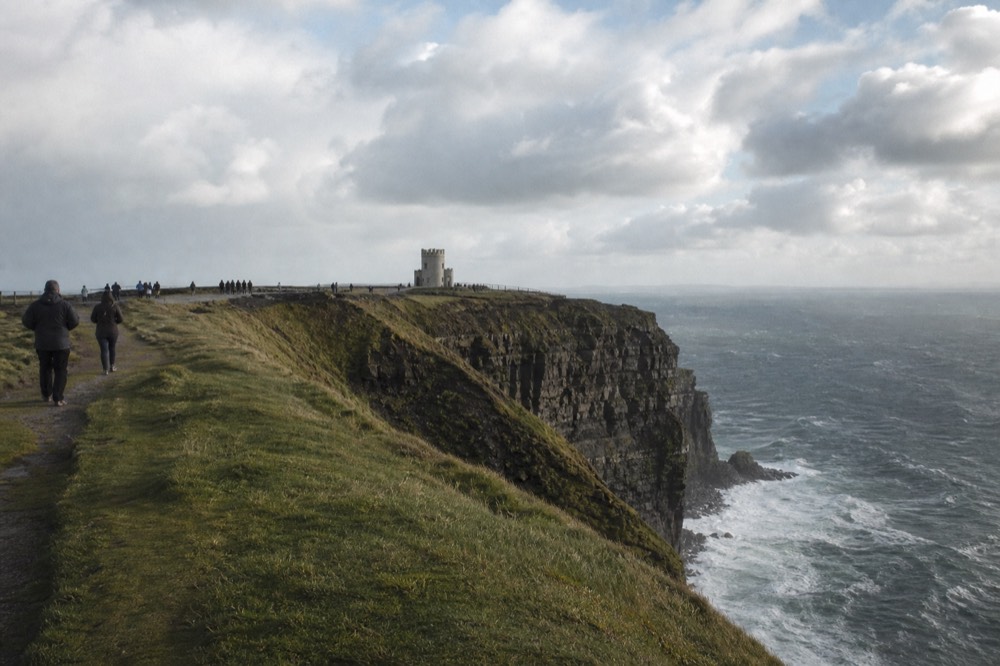
A few groups warrant extra thought. Very small children can find the motion and the noise overwhelming on a rough day, though families do the calm-day cruise happily all season; our guide to cruising with young children covers ages and what to expect. Anyone with balance issues or limited mobility should weigh the moving deck and the step down to the boat. And if the clifftop path and O'Brien's Tower are what you actually pictured, the boat is not a substitute. As Cliffs of Moher Cruises, we would rather point you to the right experience than sell you the wrong one. The full comparison sits in our cruise versus the clifftop visitor centre guide.
| The cruise suits | Think twice, or plan around it |
|---|---|
| Anyone happy to pick a calm morning | Travellers with only a rough, windy afternoon free |
| Families with children on a settled day | Very young children on a big-swell sailing |
| Photographers after the sea-level angle | Anyone for whom boat motion is a health issue |
| Visitors comfortable with open-water motion | People set on the clifftop walk and O'Brien's Tower |
What happens if the sea is too rough to sail?
The operator cancels or reschedules when the sea is unsafe or simply too rough to enjoy, which is their judgment call. If they cancel, you are emailed and offered a full refund or a place on another sailing. A customer cancellation is refunded in full up to the cutoff stated on your booking confirmation. There is no published wind or swell number; it is the skipper's judgment on the day.
The cancellation policy is more generous than many visitors expect, and it takes a lot of the risk out of booking ahead. The operator will pull or amend a sailing not only when conditions are unsafe but when they judge the sea too rough to be pleasant, even if it is technically workable. That is a passenger-friendly stance: they would rather refund you than run a trip you will hate. When they cancel, you get an email and the choice of a full refund or a reschedule to another sailing or day.
Your own flexibility is protected too. Cancel before the cutoff stated on your booking confirmation and you are refunded in full; after that deadline the operator will try to move you to another sailing, though a refund is not guaranteed that late. There is no magic swell threshold published, because Atlantic conditions do not reduce to a single number, so the decision rests on the skipper reading the sea that morning. Real example: the whole operation stood down for two days when Storm Amy came through in early October 2025, then resumed once it passed. Booking an earlier date in your trip, rather than your last day, gives the weather room to cooperate. The operator's own cancellation terms spell out the refund windows.
| Scenario | What happens |
|---|---|
| Operator cancels for rough or unsafe seas | Email notice, full refund or reschedule offered |
| You cancel before the deadline in your booking | Full refund |
| You cancel after that deadline | Best-effort reschedule, refund not guaranteed |
| A named storm shuts the coast | All sailings stood down, service resumes when it clears |
Which cliff trip is most comfortable if you are seasick-prone?
Every featured cruise involves open water. The short Doolin trip limits the total time aboard, while the Galway island combination adds a longer sea journey. Neither guarantees a smoother ride. Choose using the forecast and your own tolerance for boat motion.
If motion is your main worry, the type of trip you book changes the exposure. The pure Doolin cliff cruise is the most concentrated dose: 45 minutes to an hour, much of it right under the wall where the reflected swell is worst. That is exactly what makes it the best cliffs-from-the-sea experience, and also the one that feels roughest on a bad day. It is the right choice on settled water and the wrong one if you are certain the sea will be up.
The Galway city-docks trip involves a longer open-water journey as well as its cliff cruise; it should not be chosen on an assumption of less seasickness. If boat motion is unsuitable for you, consider a land visit, subject to weather closures. Our boat-tour comparison weighs the experiences.
| Trip type | Time at the rough cliff base | Best for |
|---|---|---|
| Dedicated Doolin cliff cruise | The most, 45 to 60 minutes under the wall | The full sea-level experience on a calm day |
| Galway ferry cruise with a cliff pass | Brief, only on the return leg | A steadier day that still glimpses the cliffs |
| The clifftop visitor centre, on land | None at all | Anyone who cannot risk boat motion |
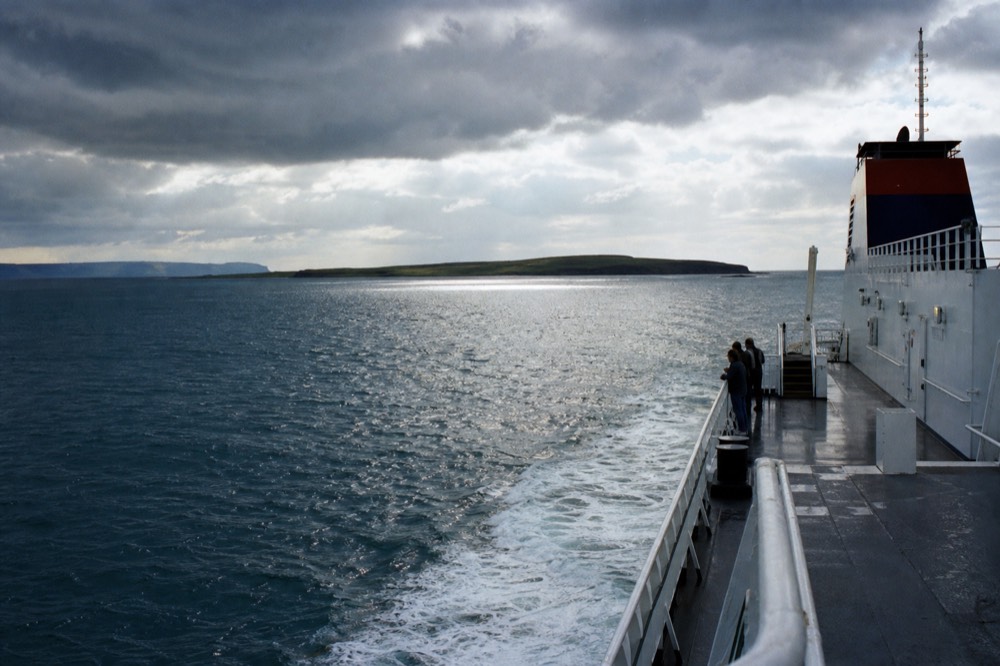
The Galway ferry is a fair middle path for a queasy traveller who still wants the cliffs from the water: a bigger, steadier boat and only a short spell at the exposed base.
Whichever way you lean, the decision that matters most for comfort is the day you sail, not the listing you pick. A calm morning on the dedicated cruise beats a rough one on any boat. Here are the options once more before the common questions below.
Frequently asked questions
How rough is the Cliffs of Moher boat cruise?
It ranges from flat calm to genuinely choppy, depending on the Atlantic swell that day. The harbour at Doolin can look calm while the base of the cliffs rolls, because the swell reflects off the rock wall. Most passengers are fine on most sailings; a minority get seasick on rough days. The sea state on your date matters more than which boat you are on.
Does the new stabilised boat stop seasickness?
It helps, but it does not remove the motion. The Cliffs of Moher Express, delivered in 2025, is a roughly 32-metre aluminium boat with modern stabilisers and anti-motion technology, so it rides steadier than the older, smaller hulls. On a big-swell day even the Express moves, and you book a cruise rather than a specific boat, so you cannot pick which vessel runs your sailing.
How do I avoid getting seasick on the cruise?
Ask a pharmacist about suitable prevention and follow the label; stay outside in the fresh air, and keep your eyes on the horizon or the cliffs. Eat lightly beforehand, sit near the middle of the boat where the motion is least, arrive early for an outside seat, and dress for wind and spray. Picking a calm morning slot helps most of all.
What happens if the sea is too rough and the cruise is cancelled?
If the operator cancels for unsafe or very rough conditions, you are emailed and offered a full refund or a reschedule to another sailing or day. A customer-side cancellation is refunded in full up to the cutoff stated on your booking confirmation; after that deadline they will try to move you but a refund is not guaranteed. There is no published wind or swell threshold, so it is the skipper's judgment on the day.
Should I skip the cruise if I get seasick easily?
Not necessarily, but choose your day. If you are strongly prone to motion sickness and your only free slot is a rough, windy afternoon, the clifftop walk is the safer call. On a calm morning, with a tablet taken beforehand and an outside seat, most seasick-prone visitors manage the hour comfortably. A larger ferry that only includes a cliff cruise is a gentler alternative if you still want them from the water.
Choose the trip that fits your day
Starting recommendation • adjust it below
Doolin: 50-minute cliff cruise
Have a travel date in mind? Check it before arranging the rest of your trip. See the cliff wall, sea stack and sea cave from a boat departing Doolin Pier.
Return to Doolin Pier. Commentary and multilingual QR guide; check the language offered for your date. Parking and clifftop admission are separate. All ages welcome. Wheelchair access depends on harbour tides: contact the operator before booking.
Choose a date to check on GetYourGuide. Ticket options and availability are confirmed there.
Check dates: Doolin: 50-minute cliff cruiseCompare routes, tailor the choice & work out costs
- Doolin: 50-minute cliff cruise · 0.83 hours
- See the cliff wall, sea stack and sea cave from a boat departing Doolin Pier. Return to Doolin Pier. Commentary and multilingual QR guide; check the language offered for your date. Parking and clifftop admission are separate. All ages welcome. Wheelchair access depends on harbour tides: contact the operator before booking.
- Galway: Inisheer, cliff cruise & clifftop · 10 hours
- Coach connections, Inisheer island time and both cliff viewpoints in one day. Meet outside Kinlay Hostel, Merchants Road, for the 09:00 departure. English live guide. Return to Galway around 19:00; food and island activities cost extra. Infants sit on laps; contact the operator about access before booking.
- Galway City Docks: Inis Mór & cliff cruise · 8.5 hours
- Sail directly from Galway City Docks to Inis Mór, with a cliff cruise on the return. Arrive at the docks 30 minutes before departure; return to Galway. English audio guidance. Island transport, activities and parking cost extra. No clifftop visit; confirm mobility and child arrangements with the operator.
Route matching, not a suitability or weather guarantee. Check ages, child seats, language and boarding requirements for your party before paying.