Is It Better to See the Cliffs of Moher in the Morning or Afternoon?
Morning usually means calmer seas and thinner crowds; afternoon and evening bring the best light on the west-facing cliffs. Here is how to time your visit and your cruise.
 By Niamh O'Connor, Cliffs of Moher & Doolin boat-cruise specialist
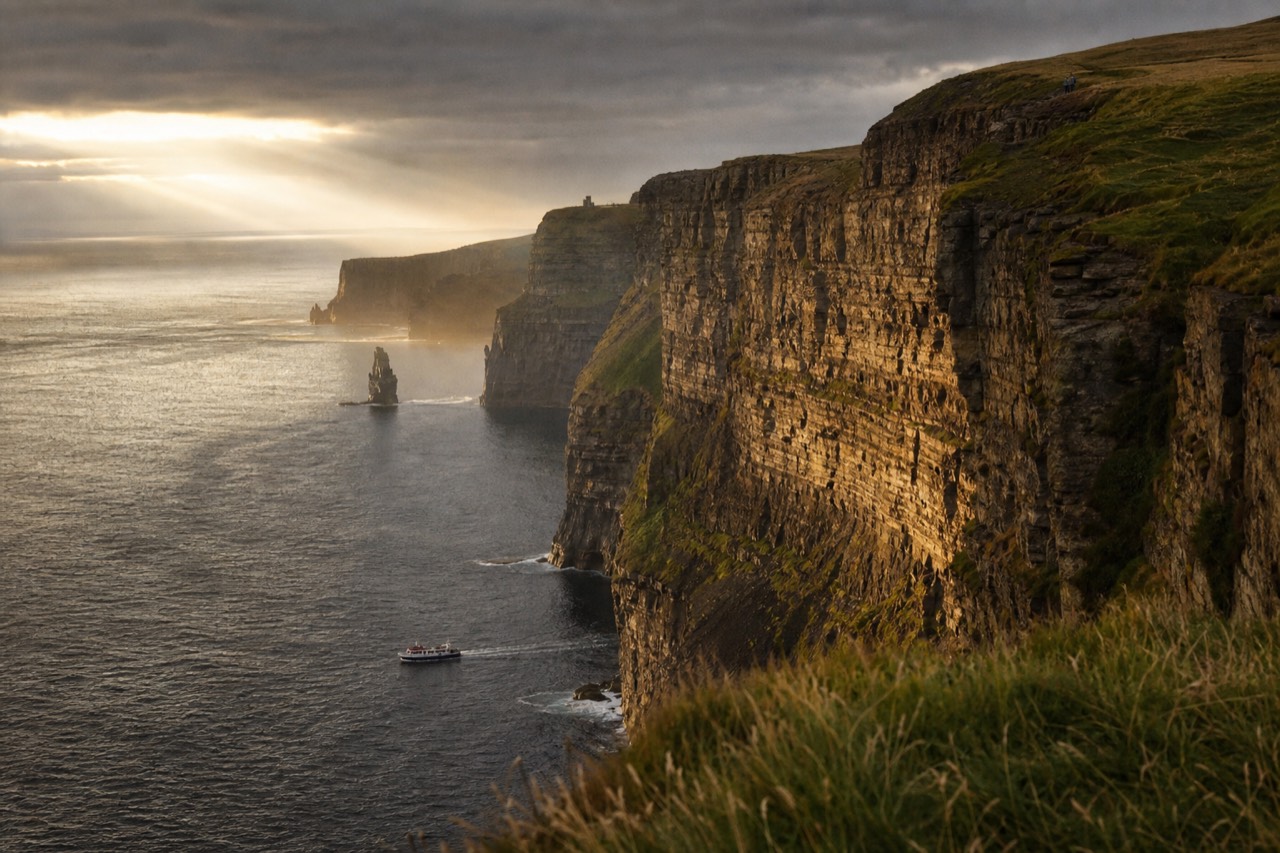
Two things pull in opposite directions when you try to time a visit to the Cliffs of Moher. Calm seas and thin crowds favour getting there early. Good light on the cliff face favours staying late. So the "morning or afternoon" question does not have one clean answer, it has two, and which one wins depends on whether you are booking a boat or standing at the rail with a camera.
There is also a wrinkle most guides skip: the dedicated cliff cruise does not actually run at dawn. The earliest sailing on the 2026 timetable is around midday, so a true early-morning boat trip is not on offer. "Morning" for the cruise really means the noon slot rather than the late-afternoon one. That changes the advice, and being straight about it saves you planning a sunrise sailing that was never possible.
Prices and review counts quoted in the editorial below are earlier planning snapshots, not live quotes. Check the booking option for your date, currency and party before comparing totals.
Is it better to see the Cliffs of Moher in the morning or afternoon?
It depends on what you are optimising. For the boat cruise, the earliest available slot is usually the safer bet, because Atlantic seas often build through the day and an early booking leaves room to rebook if weather turns. For the clifftop, early morning beats the midday coach crowds, while late afternoon and evening give the best light on the west-facing cliffs. If you can, cruise earlier and walk the clifftop later.
The split is between comfort and beauty. Morning tends to win on calm water and elbow room; afternoon and evening tend to win on light. Neither is universally right, and the best plan for a full day actually uses both windows for different parts of the visit. The rest of this article sorts which window suits which goal.
At Cliffs of Moher Cruises the aim is to time your day honestly rather than sell you a slot. Here are the cruises you would be timing, side by side, before the detail on when to take them.
| Your goal | Better window | Why |
|---|---|---|
| A calm boat cruise | The earliest slot you can get | Wind and swell often build through the day |
| Fewer crowds on the clifftop | Early morning or late afternoon | Midday is the coach-tour peak |
| The best light on the cliff face | Afternoon into evening | The cliffs face the Atlantic and catch the low sun |
| Flexibility if weather turns | Morning or early slot | Leaves later sailings to rebook onto |
Read that table as a menu, not a verdict. You can chase calm water, thin crowds or golden light, but rarely all three at once, so pick the one that matters most to you. Our guide to the best time for a cruise widens this out to the whole season.
Why is the earlier slot usually calmer for the boat cruise?
Atlantic wind and swell tend to strengthen as the day warms, so the earliest sailing is often the steadiest ride under the cliffs. It also gives you the most flexibility: if a morning sailing is cancelled for weather, there are still later slots that day or the next to rebook onto. On the 2026 Doolin timetable the earliest cliff cruise departs around midday in high summer, so "morning" here means the noon slot rather than dawn.
The mechanism is simple. Daytime heating builds the sea breeze, and the base of the cliffs is exposed water where swell reflects off the wall and doubles up. A harbour that looks calm at noon can be rolling by five. That is why the operator and most guides nudge you toward the earlier departure, not because the view changes, but because the ride and the odds of sailing at all are better.
Two caveats keep this honest. First, this is a tendency, not a rule: an afternoon can be flat and a morning can be wild, because the Atlantic answers to the weather system passing through, not the clock. The operator's own Doolin Ferry timetable and terms make clear that sailings are cancelled or amended on the skipper's read of conditions, morning or afternoon, with a full refund or a reschedule when they call it off. Second, the earlier slot is only calmer among the slots that exist, and on this route the earliest is midday, so you are choosing between a noon sailing and a late-afternoon one rather than dawn versus dusk. The 2026 season runs from 28 February to 1 November, weather permitting, with more departures through the core summer and fewer in the shoulder weeks, so your choice of slots is widest in the middle of the year.
It helps that the newer stabilised boat, the Cliffs of Moher Express delivered in 2025, rides steadier than the older hulls in a swell, though which boat runs your sailing is not something you can pick in advance. Booking the earliest calm slot you can, and an earlier day in your trip rather than your last, gives you the most room to move if the sea turns.
When is the clifftop least crowded, morning or afternoon?
Early morning and late afternoon are the quietest windows at the clifftop; the middle of the day is the coach-tour peak. The visitor centre drew just over 1.5 million people in 2025, Ireland's second most-visited attraction, and most of them arrive on midday coaches. Come at opening or in the last couple of hours before dusk and the paths are far emptier, especially outside July and August.
The crowd pattern follows the coaches, which cluster the cliffs into a midday rush. Guided day trips from Galway and Dublin are built to land around lunchtime, so 11am to 3pm is the busiest stretch on the clifftop paths. Turn up at opening and you often have the O'Brien's Tower viewpoint to yourself; come back near closing and the day-trip crowd has already left for home. That freedom to time your arrival raises a common question, whether you can just show up or need to pre-book, which our sibling piece answers for the boat and the clifftop both.
The scale of that midday surge is easy to underestimate. The official Cliffs of Moher site reports the clifftop drew just over 1.5 million visitors in 2025, and roughly half are international, most of them arriving on organised coaches timed to the same middle-of-the-day window. On a July afternoon the car park and the main path can feel packed; the same spot at 9.30am or 6pm feels like a different place. If a quiet, uncrowded clifftop matters more to you than anything, the shoulder months of April to June and September to October, visited early or late, are the sweet spot.
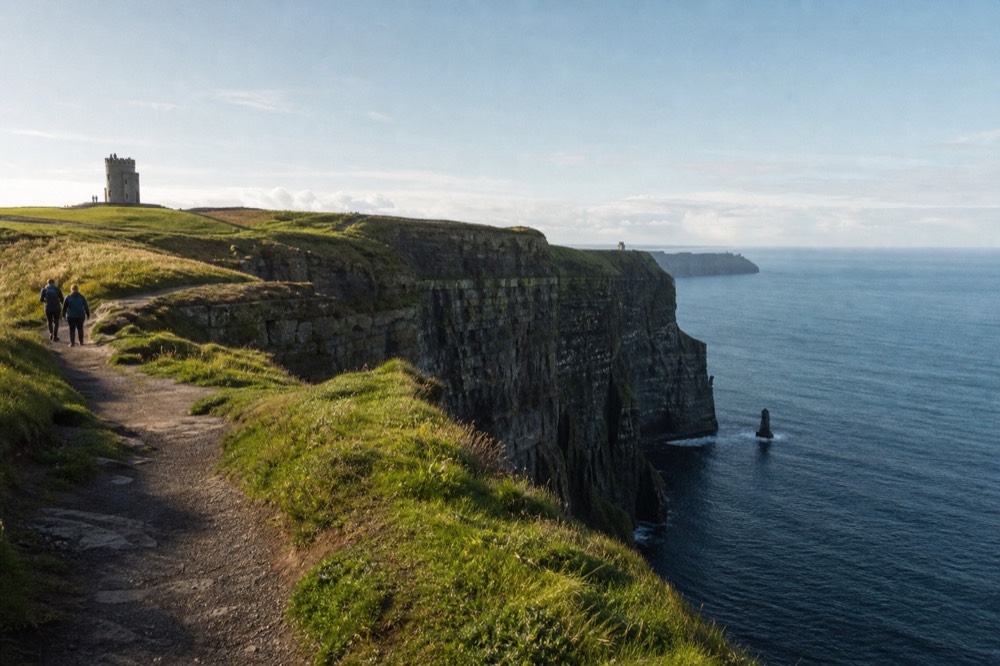
This is where the cruise and the clifftop can be timed to cover for each other. Since the boat runs from around midday, you might walk the quieter clifftop early, drive the 8 km to Doolin for a midday or early-afternoon sailing, then have the evening light behind you. Our guide comparing the cruise and the clifftop visitor centre helps you decide how to split the day.
Which is better for photography, morning or afternoon?
Afternoon into evening is generally better for photographing the cliffs, because they face the Atlantic to the west and catch the low, warm light late in the day. In the morning the sun is behind the cliffs, so the face can look flat or backlit, though a clear morning still gives crisp, even light. For the classic glowing wall and long shadows, aim for the last few hours before sunset.
The geography does the work here. The cliffs run along the Atlantic edge of County Clare and present their great face to the west, as the location described in Wikipedia's Cliffs of Moher entry makes plain, so the wall is lit head-on by the setting sun and shaded by its own bulk in the morning. Late light rakes across the rock and lifts the texture of the layered shale, while a clear midday flattens it and a low morning sun sits awkwardly behind the cliffs. Summer helps, with the sun not setting until after 10pm in June and July, which stretches the golden window well into the evening after the coaches have gone.
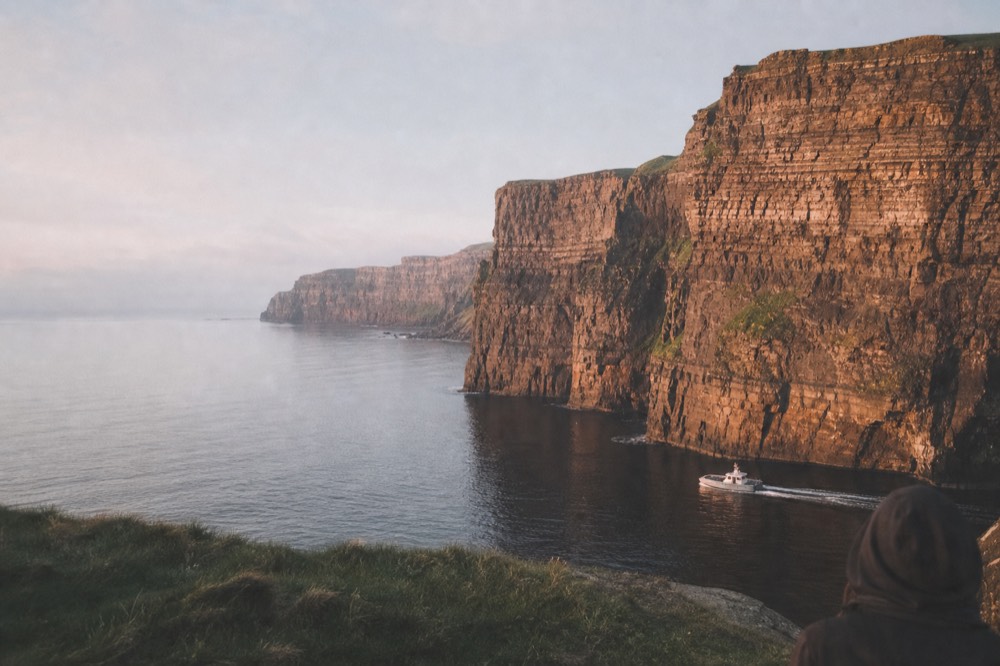
For the cruise, that creates a nice overlap: the noon-to-evening sailings sit inside the better-light half of the day, and a late-afternoon boat can put you under the wall as the light warms, if the sea stays calm enough to sail. The catch is the trade-off you have already met, since the later slots are also the ones most exposed to a building swell, so a photographer chasing evening light should keep the earlier days of the trip flexible in case a late sailing is cancelled.
Worth saying plainly: from the water the light story is simpler than from the clifftop, because you are looking up at a wall rather than composing a horizon. Warm evening light on the rock is lovely, but even a flat midday cruise delivers the scale that is the whole reason to be down there. Photographers agonise over the hour; most passengers just want a calm sea and a clear enough sky to see the top of the cliffs, which is a separate question from where the sun sits.
Is morning or afternoon better for the puffins and wildlife?
For the birds, the time of year matters far more than the time of day. Puffins are at the cliffs from the end of March to mid-July, at their best in May and June, and they work the ledges and the sea stack throughout the day rather than at one narrow hour. Guillemots, razorbills, kittiwakes and fulmars are present whenever the boat sails in season. Dolphins and seals are possible on any slot, morning or afternoon, but never guaranteed.
If wildlife is your main reason to sail, put your effort into hitting the late-spring window and picking a calm slot, not into agonising over noon versus five o'clock. The colonies are busiest in May and June, when the puffins are nesting on the grassy slopes and on Goat Island beside the An Branán Mór sea stack, one of the largest seabird roosts on the coast. The crew slows the boat there on most sailings regardless of the hour, so both the midday and the late-afternoon departures give you the same close pass.
There is a mild edge to the earlier slot on a hot, still summer day, when birds can be a touch more active in the cooler part of the afternoon and the flat light is kinder for spotting them on the water. It is a small factor next to the season and the sea state, though. Our puffin and seabird calendar sorts the timing month by month, and the best month to visit piece widens it to the whole year.
What about fog and visibility through the day?
Fog is the wild card, and it does not respect the clock. Sea fog and low cloud can sit over the cliffs on any morning or afternoon, and 2026 saw frequent reports of fog obscuring the cliff tops from the water in late summer. Morning fog sometimes burns off by midday, so a foggy dawn is not always a lost day. There is no reliable "clearer window", which is another reason to keep your booking flexible.
The Clare coast makes its own weather, and the Atlantic feeds it moisture, so mist can roll in and lift again within an hour. That is frustrating to plan around, but it also means an unpromising morning can clear into a bright afternoon, and a clear start can cloud over. The practical response is not to gamble everything on one slot: book a cruise you can rebook, and keep the clifftop, which is worthwhile in most conditions, as the fallback if the boat is fogged off.
Fog behaves differently for the two viewpoints, which is worth knowing when you plan the order of your day. From the clifftop, low cloud can swallow the view down entirely and leave you staring into grey soup. From the boat, the base of the wall often stays visible even when the tops are lost, so a cruise can still be worthwhile in conditions that ruin the clifftop, and the reverse can be true when sea fog sits low on the water. That is another argument for doing both if you can, since the day rarely fogs out both viewpoints at once.
Late summer seems to bring the most of it. Recent 2026 traveller reports clustered around August described fog and low visibility hiding the cliff tops from the water on a run of mornings, and the wider forecast for the Clare coast that month leaned unsettled and damp. None of that makes a visit a write-off, but it does argue for building a spare window into the trip rather than pinning everything on a single afternoon.
If the operator cancels for weather, you get a full refund or a place on another sailing, and a customer cancellation is refunded in full up to the cutoff stated on your booking confirmation. In October 2025, for instance, every sailing was cancelled for two days when Storm Amy came through, then resumed once it passed. Our guide to the best months for a cruise and the sibling on the best month to visit both help you stack the odds.
So, morning or afternoon: the verdict
Book the boat for the earliest slot you can, which in practice means the midday sailing, for the calmest water and the most flexibility. Walk the clifftop either early, to beat the coaches, or late, for the light and the emptier paths. On a full day, the neat plan is a quieter clifftop in the morning, a midday or early-afternoon cruise, and the evening glow to finish. Keep the whole day flexible for weather.
If you are forced to choose a single window, weigh what you most want to protect. Prone to seasickness or worried about the sailing running at all? Take the earliest boat. Chasing the postcard light or a quiet path? Favour late afternoon and evening on the clifftop. Either way, the sea has the final vote, so the real trick is less about the hour and more about leaving room to move if conditions change.
And do not let the morning-or-afternoon question crowd out the bigger levers. The month you visit shapes the crowds and the light far more than the hour, and the sea state on the day decides whether the boat sails at all. Get the season and the flexibility right and either window will serve you well; get them wrong and no clever choice of hour will save a fogged-off, sold-out afternoon on your last day. Our guide to the calmest months for a cruise is the place to start once the time of day is settled.
Here are the cruises to time, one more time, from the dedicated Doolin sailing to the Galway options, before the questions below.
Frequently asked questions
Is it better to see the Cliffs of Moher in the morning or afternoon?
It depends. For the boat cruise, the earliest slot is usually calmer and more flexible, since Atlantic seas often build through the day. For the clifftop, early morning beats the midday coach crowds, while late afternoon and evening give the best light on the west-facing cliffs. On a full day, cruise earlier and walk the clifftop later.
Can you take the cliff cruise early in the morning?
Not at dawn. The earliest cliff cruise on the 2026 Doolin timetable departs around midday in high summer, with later sailings into the evening. In the shoulder weeks the first departure is early afternoon. So "morning" for the boat really means the noon slot rather than a sunrise sailing, and that earliest slot is usually the calmest of the day.
What time of day is best for photographing the cliffs?
Afternoon into evening is generally best, because the cliffs face west and catch the low, warm light late in the day, which lifts the texture of the rock. In the morning the sun sits behind the cliffs, so the face can look flat or backlit. In June and July the sun does not set until after 10pm, stretching the golden window well into the evening.
When are the Cliffs of Moher least crowded?
Early morning and late afternoon are the quietest, while the middle of the day is the coach-tour peak. The clifftop drew just over 1.5 million visitors in 2025, most arriving on midday coaches from Galway and Dublin. Come at opening or in the last couple of hours before dusk, especially outside July and August, for far emptier paths.
Does fog clear in the morning or afternoon?
There is no reliable pattern. Sea fog and low cloud can sit over the cliffs at any time of day, and 2026 saw frequent late-summer reports of fog hiding the cliff tops from the water. A foggy morning sometimes burns off by midday, but it is not guaranteed, so keep your booking flexible and treat the on land but still subject to weather clifftop as a fallback if the boat is fogged off.
Choose the trip that fits your day
Starting recommendation • adjust it below
Doolin: 50-minute cliff cruise
Have a travel date in mind? Check it before arranging the rest of your trip. See the cliff wall, sea stack and sea cave from a boat departing Doolin Pier.
Return to Doolin Pier. Commentary and multilingual QR guide; check the language offered for your date. Parking and clifftop admission are separate. All ages welcome. Wheelchair access depends on harbour tides: contact the operator before booking.
Choose a date to check on GetYourGuide. Ticket options and availability are confirmed there.
Check dates: Doolin: 50-minute cliff cruiseCompare routes, tailor the choice & work out costs
- Doolin: 50-minute cliff cruise · 0.83 hours
- See the cliff wall, sea stack and sea cave from a boat departing Doolin Pier. Return to Doolin Pier. Commentary and multilingual QR guide; check the language offered for your date. Parking and clifftop admission are separate. All ages welcome. Wheelchair access depends on harbour tides: contact the operator before booking.
- Galway: Inisheer, cliff cruise & clifftop · 10 hours
- Coach connections, Inisheer island time and both cliff viewpoints in one day. Meet outside Kinlay Hostel, Merchants Road, for the 09:00 departure. English live guide. Return to Galway around 19:00; food and island activities cost extra. Infants sit on laps; contact the operator about access before booking.
- Galway City Docks: Inis Mór & cliff cruise · 8.5 hours
- Sail directly from Galway City Docks to Inis Mór, with a cliff cruise on the return. Arrive at the docks 30 minutes before departure; return to Galway. English audio guidance. Island transport, activities and parking cost extra. No clifftop visit; confirm mobility and child arrangements with the operator.
Route matching, not a suitability or weather guarantee. Check ages, child seats, language and boarding requirements for your party before paying.